

| A: | 40 mm | - | 1.57" inch |
| B: | 39 mm | - | 1.54" inch |
| C: | 150 mm | - | 5.91" inch |
| D: | 19 mm | - | 0.75" inch |
| E: | 30 mm | - | 1.18" inch |
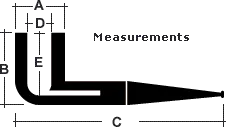


| A: | 40 mm | - | 1.57" inch |
| B: | 39 mm | - | 1.54" inch |
| C: | 150 mm | - | 5.91" inch |
| D: | 19 mm | - | 0.75" inch |
| E: | 30 mm | - | 1.18" inch |
| Filter: | |
| Brand: | Frank Axmacher |
| Product no: | MH1317 |
Since 2004 Frank Axmacher has had an affair with "Lady Briar". The fact that his learned craft is that of a stonemason and sculptor helped him a lot in this task, because in this way he was already familiar with the many problems and solutions in sculpting. in his first days of pipemaking, he refined his craft during several stays at Bertram Safferling's workshop.
Frank's pipes are made completely by hand, from the best plateaux briar and vulcanite/ebonite rod stock. He has evaluated acrylic, too; he occasionally uses it as stem material, but only in cases where it shows advantages for stylistic reasons. Stem and shank treatments made of acrylic, horn and different woods may occur, too.
Frank's work clearly shows his enthusiasm for shapes and lines. So it comes as no surprise that his pipes often show sharp, nevertheless flowing, lines and clear geometrical design elements. The surfaces and the finish of his pipes and his stem work are top notch.[2]
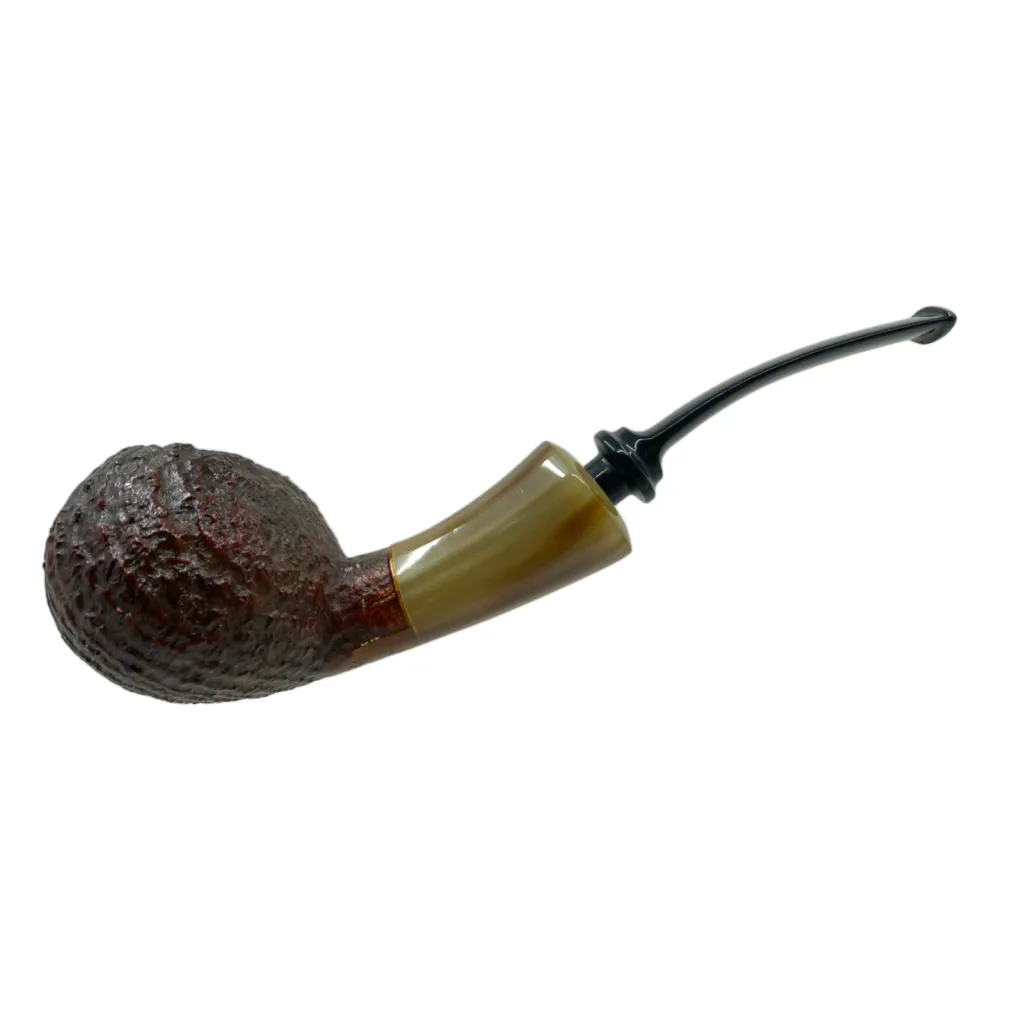
We see inspiration from both Cornelius Manz and the Danish master Sixten Ivarsson in this gorgeous rather large deep blasted oval headed pipe from 2008. In the 60s you could find pipes from WØLarsen that tried to do the same, but the artisanship today exceeds them in so many ways. The craftsmanship is perfect and this squattet potatosack is in every way a high grade pipe.
Since 2004 Frank Axmacher has had an affair with "Lady Briar". The fact that his learned craft is that of a stonemason and sculptor helped him a lot in this task, because in this way he was already familiar with the many problems and solutions in sculpting. in his first days of pipemaking, he refined his craft during several stays at Bertram Safferling's workshop.
Frank's pipes are made completely by hand, from the best plateaux briar and vulcanite/ebonite rod stock. He has evaluated acrylic, too; he occasionally uses it as stem material, but only in cases where it shows advantages for stylistic reasons. Stem and shank treatments made of acrylic, horn and different woods may occur, too.
Frank's work clearly shows his enthusiasm for shapes and lines. So it comes as no surprise that his pipes often show sharp, nevertheless flowing, lines and clear geometrical design elements. The surfaces and the finish of his pipes and his stem work are top notch.[2]